ANZSHM Biennial Book Prize

The ANZSHM Biennial Book Prize is awarded for the best book, published within a specified two-year period, on the history of health and medicine in Australia, New Zealand or the wider Pacific region.

The winning publication is selected on the basis of:

  • academic merit

  • accessibility to a wider audience and

  • contribution to the field of the history of health and medicine.

The value of the prize is $500.

The next award will be made in 2027 at ANZSHM’s 20th Biennial Conference in Melbourne. All books nominated will be on display. The winner and finalists will be announced during the conference dinner.

Eligibility for Entry, 2027

  • Sole author or multi-authored monograph

    (Edited books and exhibition catalogues are ineligible)

  • Published 1 January 2025 to 31 December 2026 (inclusive)

  • Author(s) hold(s) membership of ANZSHM at time of nomination submission.

  • Nominations reach ANZSHM Honorary Secretary by email no later than 5pm AEST, 1 March 2027.

  • Nominations include: author name, title of book, publisher, publication date.

  • Nominee willing to supply ANZSHM with 3 hard copies of the book for judging

How to enter

ANZSHM will advise successful nominees about how to lodge 3 hard copies for judging.


Inquiries to ANZSHM Honorary Secretary

Previous Winners and Finalists

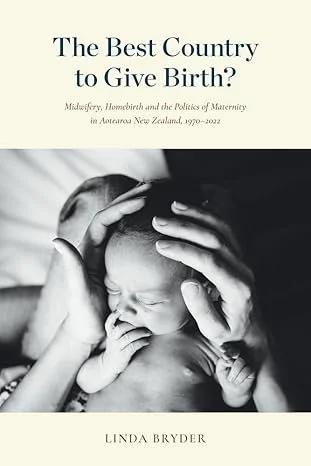
2025Winner - Linda Bryder
The Best Country to Give Birth? Midwifery, Homebirth and the Politics of Maternity, Aotearoa 1970–2022 (Auckland University Press, 2023)

Judging Panel’s Citation
This is an impressive and exhaustive account of over 50 years of the history of midwifery in New Zealand. Commencing  from the 1970s, this book canvasses the emergence of homebirth and the role it has played in New Zealand's unique midwifery provision. Bryder has compiled extensive and diverse sources to trace the history of midwifery care in NZ, and maps out the key developments in midwifery accessibility, philosophy, training and accountability. The end result is a comprehensive history of midwifery and childbirth in NZ. The book includes compelling and meticulous documentation of how feminist lobbying against the (at that time) mainly male Obstetrics & Gynaecology establishment, counterculture and misinformation won a long campaign to take midwifery and midwifery education away from the 'medical' model. The roles of particular players, most notably Joan Donley and (later to be PM) Helen Clark are forensically examined. In the words of Janet McCalman AC, this 'quietly spoken book with a shocking story to tell … is a crucial step forward in the advancement of reproductive rights, women’s health and good medical practice’.

Highly Commended/Finalists
Philippa Barr, Uncertainty and Emotion in the 1900 Sydney Plague (Cambridge, 2024)
Eugenia Pacitti, The Body Collected in Australia: A History of Human Specimens and the Circulation of Biomedical Knowledge (Bloomsbury, 2024)
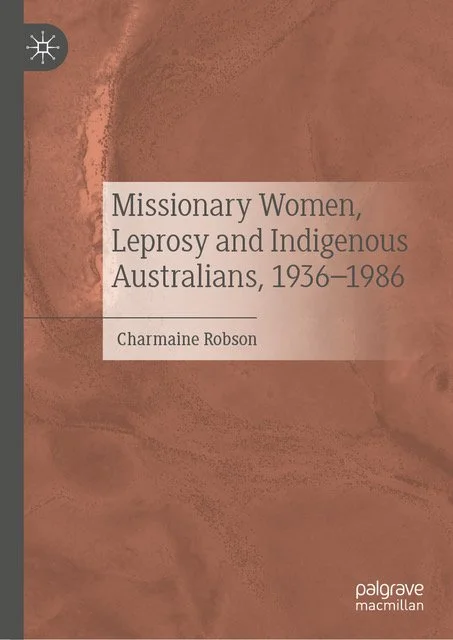
2023Winner - Charmaine Robson
Missionary Women, Leprosy and Indigenous Australians, 1936-1986 (Palgrave Macmillan, 2022)

Judging Panel’s Citation
Charmaine’s book brings together leprosy and Catholic missions, to explain the structures set up for Indigenous sufferers in four leprosaria in northern Australia between the 1930s and 1986 which were home to almost two thousand patients over that time. The study draws on archival sources including interviews to bring out perspectives of patients, nurses, doctors, bureaucrats, and missionaries, along with Indigenous families and communities. Charmaine rightly points out that this female-centered missionary initiative has been overlooked in history, as has the history of leprosy in the Aboriginal population more broadly. While she explores Europeans’ racial understandings of Indigenous people as a motivation for isolation and control, she also considers the Christian missions’ understandings of leprosy sufferers in biblical terms. Her focus above all is on the Catholic sister nurses, giving them voice, albeit not in a hagiographic way, along with the patients they served. One of the strong points is that she does not treat Indigenous people as victims, but shows their agency and resilience in their formation of communities and relationships. The book forms a significant contribution to the history of health and medicine and to Australia’s colonial history.

Highly Commended
Shayne Brown - Hindsight: The History of Orthoptics in Australia 1931-1960 (Orthoptics Australia Ltd., 2022)
Brian Draper -
Dementia and Old Age Mental Health: A History of Services in Australia (Australian Scholarly Publishing, 2022)